
Materials & components
Zinc Alloy vs Stainless Steel Faucet Bodies: An Importer's Comparison
Compare zinc alloy and stainless steel faucet components, understand waterway risks, and learn how importers can verify materials before ordering.
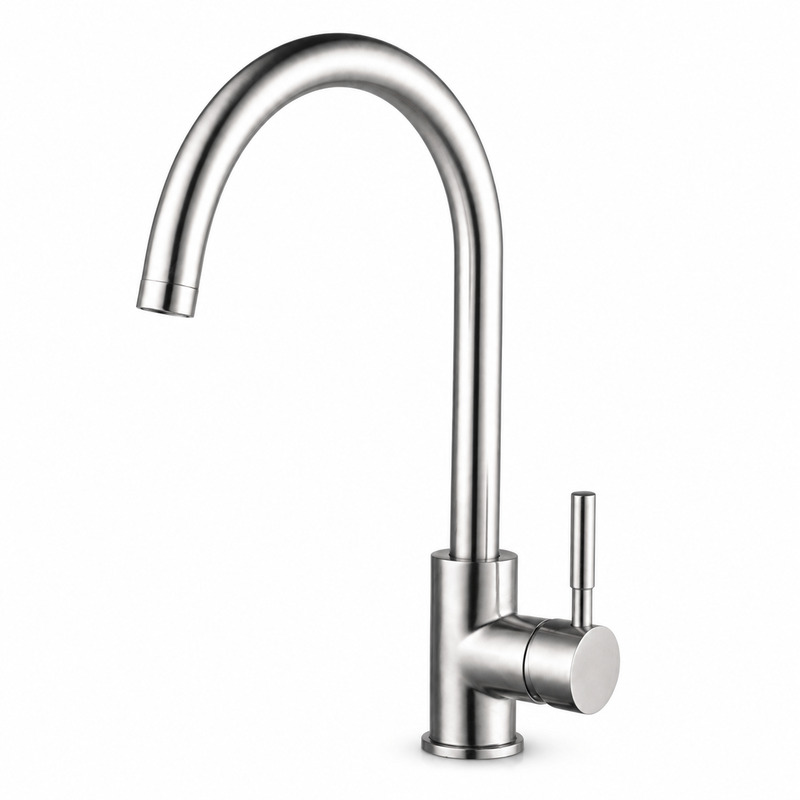
Zinc alloy has a reputation problem in faucet sourcing — some of it deserved, most of it misplaced. The material itself is not the issue. The issue is where it is used, and whether the buyer knows which parts of a faucet are zinc and which are not.
This guide explains what zinc alloy is actually good at, where it fails, and how material substitution hides inside a quotation.
The Short Answer
| Zinc alloy (zamak) | Stainless steel (SUS304) | |
|---|---|---|
| Common use | Handles and decorative parts | Bodies, spouts and water-contact parts |
| Corrosion behaviour | Depends on alloy, coating and exposure; persistent moisture can cause white corrosion | Passive surface layer; not immune to chloride attack or poor processing |
| Engineering checks | Grade, geometry, load, temperature and coating | Grade, geometry, joining and surface condition |
| Cost | Often economical for detailed die-cast parts | Depends on design and manufacturing route |
| Typical mistake | Treating an outer shell as proof of the internal waterway material | Assuming every stainless component is 304 |
A decorative alloy specification is not evidence that a component is suitable for pressure-bearing drinking-water service. Verify the actual waterway, the intended duty and the applicable market requirements.
What Zinc Alloy Is, and Where It Belongs
In faucet sourcing, zinc alloy often means zamak, a family of zinc-based die-casting alloys. These can form detailed shapes economically and are commonly considered for handles, decorative covers and other external components.
Handles still carry operating loads, and decorative parts can encounter humidity and cleaning chemicals. Check strength, fastening, finish adhesion and corrosion performance for the actual design. A material is appropriate because the component is specified and validated for its job, not simply because it stays outside the waterway.
Where Zinc Alloy Fails
Exposure matters. Persistent moisture can cause white zinc corrosion products. Zinc can also develop protective surface films in suitable environments; it is inaccurate to say corrosion always continues unchecked. Coating damage, trapped moisture and contact with other metals affect the outcome.
Design matters. Do not accept an ordinary decorative zinc die casting as an undocumented substitute for a specified pressure-bearing water-contact component. Suitability depends on alloy, wall geometry, temperature, loading, corrosion exposure and the relevant product requirements.
Weight does not prove quality. Mass reflects both density and how much material the designer used. A heavy outer shell says little about the alloy or the construction of the internal waterway.
The purchasing rule is simple: require a component-level material schedule and verify critical parts against it.
How Substitution Hides
Material substitutions can be difficult to spot. Check three places.
- In the quotation's material column. A body specified as "stainless" or "brass" in the marketing copy may appear as a generic alloy code in the price sheet. Read the price sheet.
- In the internal parts you cannot see. A body is honest but an internal part is zinc — and internal galvanic contact between dissimilar metals can accelerate corrosion where you cannot inspect it.
- In the sample-versus-production gap. The sample you approve is one thing; production is another. This is why verification must happen at pre-shipment, on production parts, not only at sampling.
Questions Worth Asking Your Supplier
Specific questions get specific answers, and vagueness is itself informative:
- Which components of this model are zinc alloy, and which are stainless? (Ask for it per component.)
- Is any zinc part in contact with the water path or under pressure?
- If two dissimilar metals touch internally, how is galvanic corrosion controlled?
- Can the material specification per component be written into the purchase order?
Written answers establish what you can verify. Confirm them against samples, production records and inspection findings.
How This Fits a Sourcing Strategy
Material selection is a market decision as much as an engineering one.
- For humid and coastal markets, pay particular attention to waterway materials, coating integrity and exposure-specific testing.
- For price-first segments, zinc in handles and decorative parts is a sensible way to hit a price point when the handle and decorative components also meet their performance requirements.
- For premium and health-positioned lines, specify the material per component and be able to show the buyer exactly what is where.
The goal is not to ban zinc alloy. It is to know precisely where it is, and to have chosen that deliberately.
About MAXTEN
MAXTEN supplies faucet series for importers, distributors and private-label brands, backed by Risheng Sanitary Ware Factory's manufacturing capabilities since 2002. Our focus is kitchen and basin faucets and related faucet sourcing requirements.
Discuss the material specification for each component before ordering. Contact maxten_mr.lin@maxten.cn or send an inquiry.
Frequently Asked Questions
Is zinc alloy always a sign of poor quality in a faucet?
No. It can be an appropriate material for specified and validated handles or decorative components. It must not be treated as an undocumented substitute for a different alloy in a pressure-bearing waterway.
Why does zinc alloy develop white rust?
Persistent moisture can produce white zinc corrosion products. The environment, coating and drainage influence the result; zinc can also form protective surface films under suitable conditions.
Is a heavier faucet always better?
No. Weight reflects material density, wall thickness and component size. It cannot establish alloy grade, waterway construction or product performance.
How do I spot material substitution in a quotation?
Request an explicit material specification for each component, including the internal waterway. Compare the quotation, approved sample and production inspection results; a generic label such as metal or stainless is insufficient.
YOUR NEXT SOURCING DECISION
Discuss the right faucet for your market.
Share your product specification, finish and target market with the MAXTEN team.