Factory verification
8 Checks to Verify a Chinese Faucet Factory Before You Order
Eight practical checks for a Chinese faucet supplier: legal identity, production, testing, certificates, samples, written specifications and inspection.
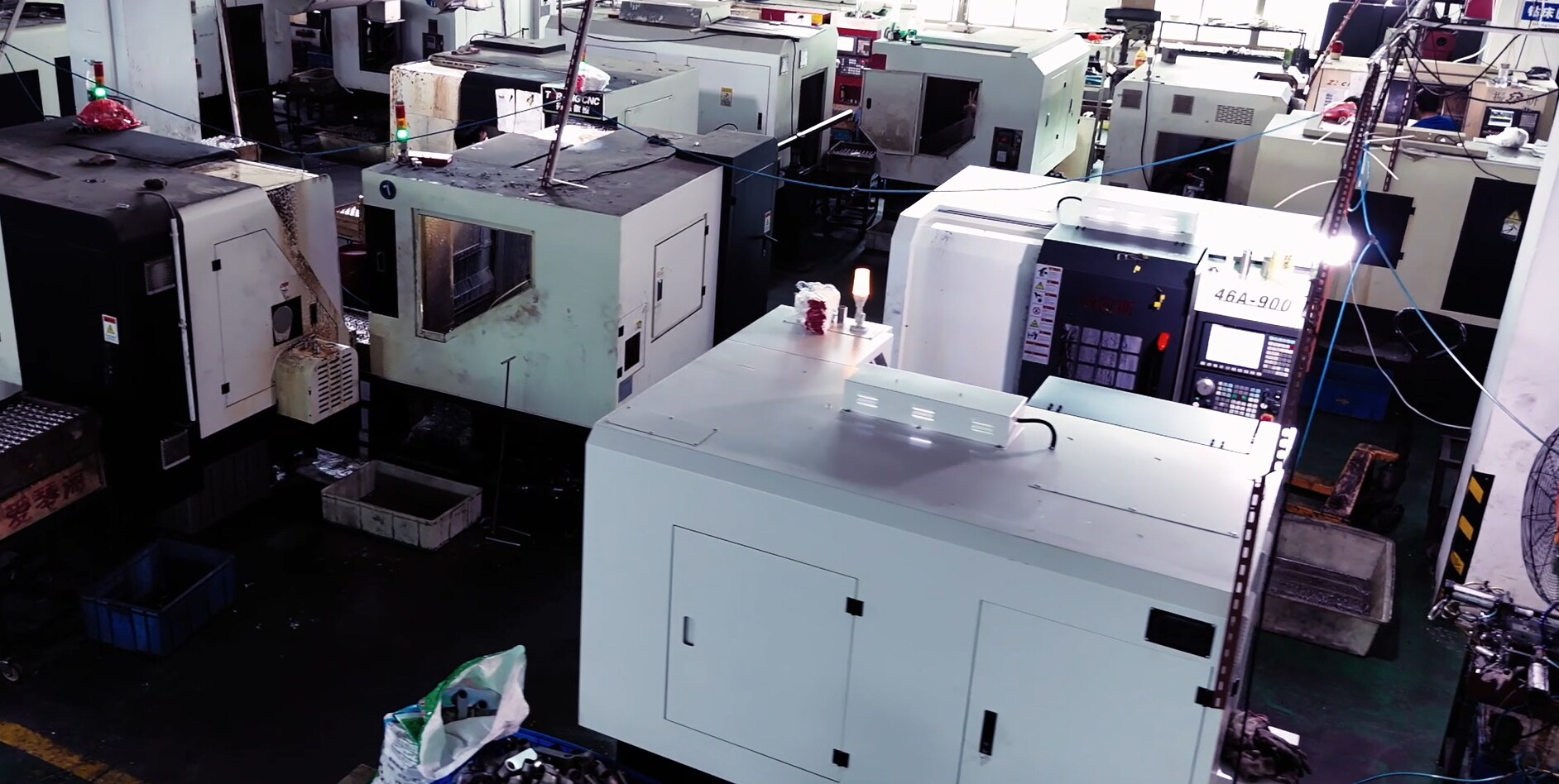
A polished sales presentation and a good sample do not establish how a production order will be made. Before committing, an importer needs to understand the supplier, its manufacturing partners and the controls connecting the approved sample to shipped goods.
This checklist is the sequence a serious importer works through before committing a container order. Eight checks, in the order that matters.
The Short Answer
| # | Check | What it helps you verify |
|---|---|---|
| 1 | Legal identity | Who is accountable for the goods |
| 2 | Factory vs trading office | Control over quality and change |
| 3 | Equipment on site | Whether the processes exist in-house |
| 4 | In-house testing | Whether quality is checked, not asserted |
| 5 | Certificates, verified | Compliance for your specific market and model |
| 6 | Sample teardown | The parts the photo does not show |
| 7 | Ten questions on the record | How they answer, not just what |
| 8 | A red-flag review | The reasons to walk away |
1. Verify the Legal Identity
Start with the entity, not the product.
- Ask for the business licence and read the registered name in full.
- Compare it with the company name on the export records they claim and the beneficiary name on the bank account that will take your deposit.
- Identify the relationship between the contracting seller, manufacturer, exporter and payment beneficiary. If an export agent or related company is involved, obtain documented authorization and an explanation before payment.
A mismatch — a licence in one name, an invoice in another, a deposit account in a third — is not automatically fraud, but it is a question that must be answered before any payment. Clarity here is the foundation for everything else.
2. Factory or Trading Office?
A manufacturer operates production processes; a trading company coordinates supply from manufacturers. Either can be a legitimate partner. What matters is visibility: who owns the specification, controls changes, handles defects and authorizes subcontracting?
Ask which entity operates each production site, which processes it performs and how outsourced work is controlled. A showroom does not prove factory ownership, and owning machinery does not by itself establish reliable quality.
3. Look for the Real Equipment
Ask for a live walkthrough focused on the process route for your model. Depending on its design and material, the route may involve casting or forging, tube forming, machining, joining, polishing, coating and assembly.
Look for:
- Production equipment that corresponds to the supplier's stated in-house operations.
- Process records connecting materials and parts to the order.
- Assembly and inspection stations, with the actual coverage and acceptance criteria explained.
- Subcontractor controls for processes performed elsewhere, including incoming inspection and change approval.
Outsourcing is common and is not automatically a weakness. Undisclosed outsourcing or missing quality controls is the issue. Ask whether finished-unit leak testing is performed on every unit or on a sample, and request the relevant records.
4. Check Whether They Test In-House
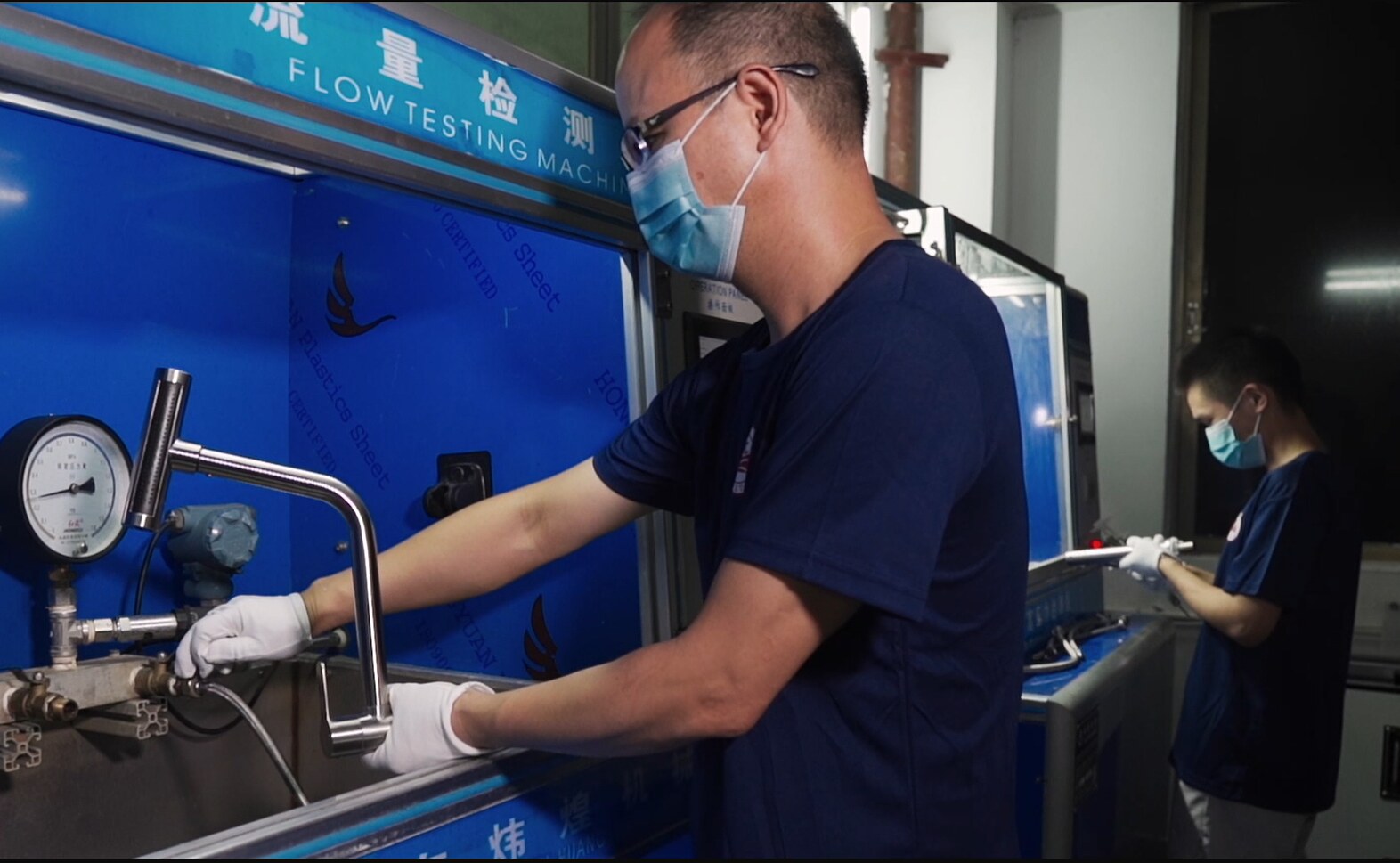
Quality that is tested is different from quality that is asserted. Look for evidence of in-house testing capability:
- Corrosion testing (salt spray, e.g. ISO 9227) as a routine batch control.
- Life-cycle / endurance testing of the valve mechanism.
- Pressure and leak testing on finished units.
- Flow-rate checks against the target market's requirements.
You do not need a factory to own every laboratory. You do need to know which tests they run, on which batches, and how the results are recorded. Ask that specifically.
5. Verify the Certificates — Properly
Certificates are the most misread documents in sourcing. What matters is not the logo, but four details:
- Model match. Does the certificate cover the exact model you are ordering, or a "similar" one?
- Standard version and market. Is it the applicable standard and accepted edition for your target market and product?
- Validity. Is it still in force? Check the issuer’s current listing and any conditions or limitations.
- Legal holder. Who holds the certificate, and is there a documented link between that holder, the manufacturer and the supplied configuration?
An unverified certificate is a liability, not an asset. Ask for the certificate that matches your model and your market, and check the details.
6. Tear Down the Sample
When the sample arrives, disassemble it before you judge it.
- Body material — confirm the alloy, not the marketing name.
- Cartridge — brand, size, and whether it is a standard part you can re-source.
- Aerator — thread standard and flow rating for your market.
- Inlet hoses — material, certification and connector standard.
- Internal small parts — is anything zinc where it should not be?
The parts you cannot see in a product photo are where cost is most often reduced.
7. Put Ten Questions on the Record
Ask these in writing and keep the answers:
- What is the registered legal entity and the export licence status?
- Which processes are performed in-house, and which are subcontracted?
- What is the material specification, per component, for this model?
- Which tests do you run in-house, on which batches?
- What certificates apply to this model and my market, and who holds them?
- What is the standard lead time, and what changes it?
- How are orders scheduled, and what happens to my order if I am delayed?
- What is your warranty policy, and how are claims handled?
- Can I appoint a third-party inspection before shipment?
- What was your most recent quality issue, and what changed afterwards?
Question 10 helps reveal how the supplier investigates problems and verifies corrective action. Ask for an example that can be discussed without exposing another customer’s confidential information.
8. Run the Red-Flag Review
Walk away, or slow down hard, if you see:
- Inconsistent legal names across licence, invoice and bank account.
- Refusal of a live factory walkthrough.
- Pressure to pay a deposit before you have documents in writing.
- Certificates that do not match your model or your market.
- Quotations with no per-component material specification.
- Reluctance to allow third-party inspection.
- A sample that differs in specification from the production description.
Any one of these can be explained. Several together are a pattern.
About MAXTEN
MAXTEN supplies faucet series for importers, distributors and private-label brands, backed by Risheng Sanitary Ware Factory's manufacturing capabilities since 2002. Our focus is kitchen and basin faucets and related faucet sourcing requirements.
Ask our team about factory visits, production processes and inspection arrangements for your order. Contact maxten_mr.lin@maxten.cn or send an inquiry.
Frequently Asked Questions
Can I verify a faucet factory without visiting China?
Document checks, a live walkthrough and independent inspection can reduce uncertainty. Remote checks have limits, especially for capacity, subcontracting and working practices; use an on-site audit when those risks justify it.
What is the difference between a trading company and a factory?
A factory operates production processes, while a trading company coordinates supply. Either can be a sound partner if responsibilities, manufacturing sites, subcontractors and quality controls are transparent and verifiable.
Which certificates should I ask a faucet factory to show?
Ask for evidence applicable to your exact product configuration and destination market. Verify the issuer, accepted standard edition, model coverage, holder and current listing or validity conditions.
How do I check the factory’s legal identity?
Compare the registered business information, contracting seller, export arrangements and payment beneficiary. Differences can have legitimate explanations, but obtain and independently verify the documented relationship before payment.
YOUR NEXT SOURCING DECISION
Discuss the right faucet for your market.
Share your product specification, finish and target market with the MAXTEN team.