
Importing & sourcing
How to Import Kitchen Faucets from China: A Step-by-Step Guide
A step-by-step guide to importing kitchen faucets from China: verify suppliers, approve samples, agree specifications, inspect production and plan shipping.
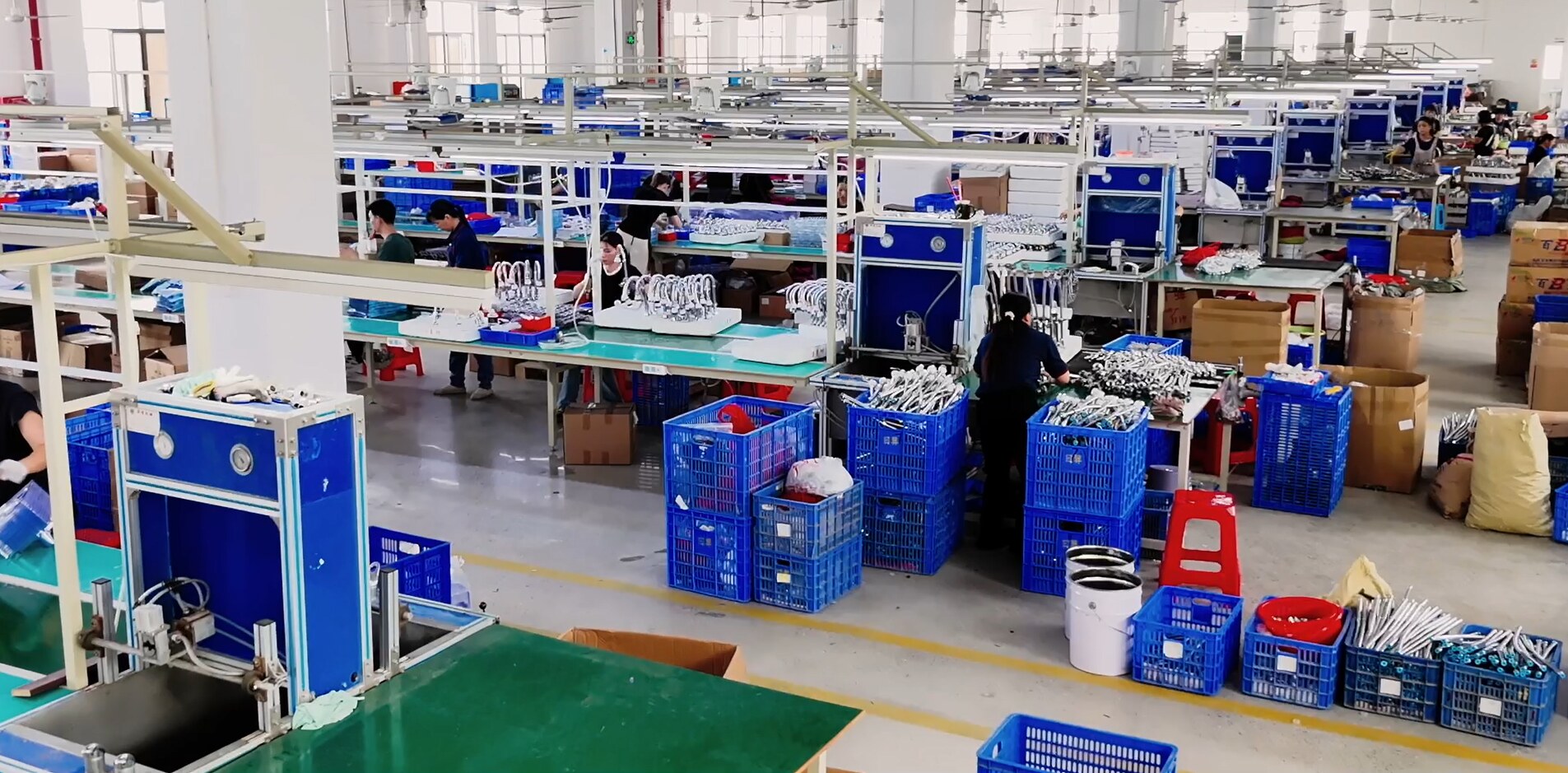
Importing faucets from China is a well-trodden path, which is exactly why so much of the advice around it is recycled from other categories — electronics, textiles, general merchandise. Faucets are different. They are a plumbing product under pressure, in contact with drinking water, subject to market-specific rules, and their failure modes appear in the end customer's home rather than on a loading dock.
This guide walks through the import process with that specificity in mind.
The Short Answer
| Stage | The point of it | Where importers go wrong |
|---|---|---|
| Find suppliers | Build a shortlist | Treating a channel as a verification |
| Verify the factory | Confirm who you are buying from | Skipping this because the sample looked good |
| Sample and approve | Fix the specification | Approving a sample that production will not match |
| Agree terms in writing | Define milestones | Verbal terms, no proforma invoice detail |
| Control quality | Catch problems before shipping | No pre-shipment inspection |
| Ship and clear | Get goods to market | Discovering document requirements too late |
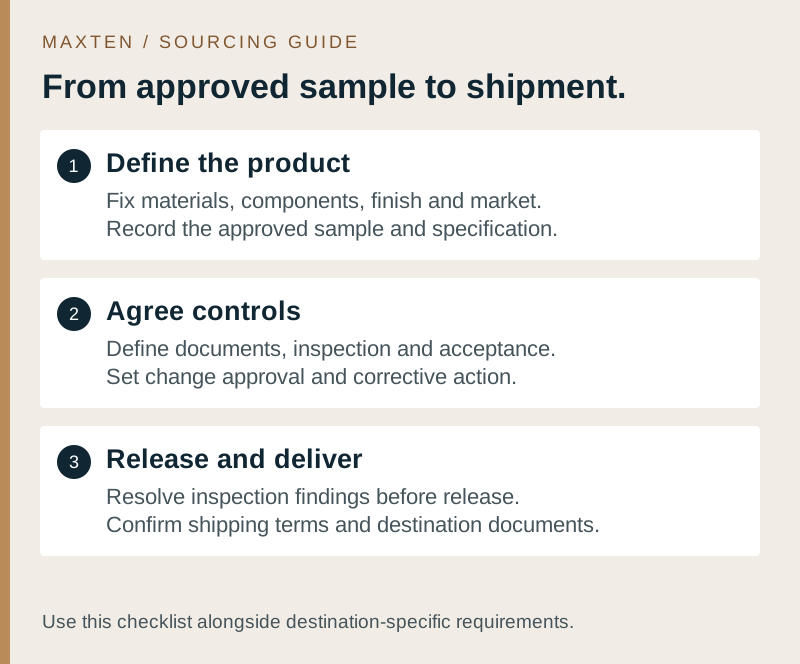
Step 1 — Find Supplier Candidates
The main channels, and what each is good for:
- Trade shows. Fastest way to see many suppliers and hold samples. Best for shortlisting, weakest for verification — a booth is a presentation.
- Established B2B platforms. Large reach, variable quality. Useful for price discovery; require the same verification as any other lead.
- Manufacturer websites. Often the most detailed technical information. Verify that the site and the legal entity match.
- Referrals from other importers. Usually the highest signal, because the referrer has already absorbed the risk you are trying to avoid.
Whichever channel you use, treat the result as a lead, not a decision. (See our factory verification checklist for the next step.)
Step 2 — Verify Before You Commit
Before pricing matters, identity does. Establish the legal entity, whether the processes are in-house, what testing is done on site, and whether you can appoint a third-party inspection. This is covered in detail in our eight-point factory verification checklist; the short version is that a good sales office is not the same thing as a good factory.
Step 3 — Sample, Then Approve in Writing
The sample is where the specification is fixed. Treat it as a document, not a souvenir.
- Confirm the material specification per component — body, cartridge, aerator, hoses.
- Confirm the finish process you are buying, not just the colour.
- Confirm the flow rate and connector standards for your market.
- Record the approved sample, and require that production match it.
- Ask what happens if production cannot match the sample — before you order.
An approved sample plus a written specification is your reference point for every dispute that follows.
Step 4 — Agree Terms in Writing
Payment terms in this industry vary by supplier, order size and relationship, and they should be agreed in writing before production starts. The detail matters more than the headline: make sure the payment schedule is tied to defined milestones — typically a deposit on order confirmation and a balance against shipping documents — and that all of it is set out in the proforma invoice.
Also settle in writing: lead time, what changes it, the packaging specification, the warranty terms, and the inspection arrangements. Anything not written down is a conversation you will have again later, under worse conditions.
Step 5 — Control Quality Before Shipping
An important control in faucet importing is pre-shipment inspection on production parts, before the container is sealed. At minimum, confirm:
- The alloy and materials against the approved specification.
- The finish against the approved sample.
- Leak and pressure testing on finished units.
- Packaging, carton marking and quantity.
Use a third-party inspection agency if you do not have your own presence. Agree the sampling plan, checks, acceptance criteria and how failures will be resolved. Inspection reduces risk but does not replace product qualification or process controls. See our test-report guide.
Step 6 — Shipping, Terms and Documents
Agree the delivery rule, named place or port and edition, as well as the documents your destination requires.
FOB and CIF under Incoterms® 2020 are for sea and inland-waterway transport. Under both, risk normally transfers when the goods are on board the vessel at the port of shipment. Under CIF, the seller arranges freight and the required minimum insurance to the named destination port; this does not mean risk transfers only at arrival. Check whether additional insurance is needed.
FCA can be more appropriate for containerized shipments handed to a carrier before vessel loading and can be used with different transport modes. Agree the named delivery point precisely. Incoterms allocate delivery obligations, costs and risk; payment terms and transfer of ownership need separate agreement.
Documents commonly include a commercial invoice, packing list and transport document, with origin and product-conformity evidence where required. Confirm the exact documents and product classification with the destination customs broker before shipment.
References: ICC Academy on FCA versus FOB and ICC on Incoterms® 2020.
The Mistakes That Cost the Most
- Trusting the sample without verifying the factory. The sample is a promise; the factory is the ability to keep it.
- No written specification. If it is not written, it is not specified.
- No agreed inspection plan. Problems discovered after shipment are harder to investigate and correct.
- Ignoring market regulation until clearance. Compliance is a design input, not a paperwork step.
- Verbal terms. Everything important belongs on the proforma invoice.
- A single supplier. One supplier is a single point of failure for your whole line.
About MAXTEN
MAXTEN supplies faucet series for importers, distributors and private-label brands, backed by Risheng Sanitary Ware Factory's manufacturing capabilities since 2002. Our focus is kitchen and basin faucets and related faucet sourcing requirements.
Discuss samples, product specifications, inspection arrangements, MOQ and lead times for your order. Contact maxten_mr.lin@maxten.cn or send an inquiry.
Frequently Asked Questions
How do I find a reliable faucet supplier in China?
Use trade shows, established B2B platforms, manufacturer websites and referrals as starting points. Verify legal identity, actual processes, subcontracting controls, relevant documentation and production samples before committing.
What payment terms are normal when importing from China?
Terms vary. Agree the method, milestones, inspection rights and required documents in writing before production. Assess payment and counterparty risk rather than assuming one deposit-and-balance split suits every order.
What documents do I need to clear a faucet shipment?
Common documents include the commercial invoice, packing list and transport document, with origin and conformity documentation where required. Confirm the exact requirements and classification with the destination customs broker.
Should I use FOB or CIF when buying faucets from China?
Both are sea or inland-waterway rules. Under both, risk normally transfers on board at shipment; CIF adds seller-arranged freight and minimum insurance to the named destination port. For containers handed to a carrier earlier, consider FCA with a precisely named place.
YOUR NEXT SOURCING DECISION
Discuss the right faucet for your market.
Share your product specification, finish and target market with the MAXTEN team.