
MATERIALS · BUYER GUIDE
Stainless Steel vs Brass Kitchen Faucets: What Importers Should Know
Stainless steel or brass faucets? A practical comparison of cost, finish options, compliance and market fit — written for importers and private-label brands.
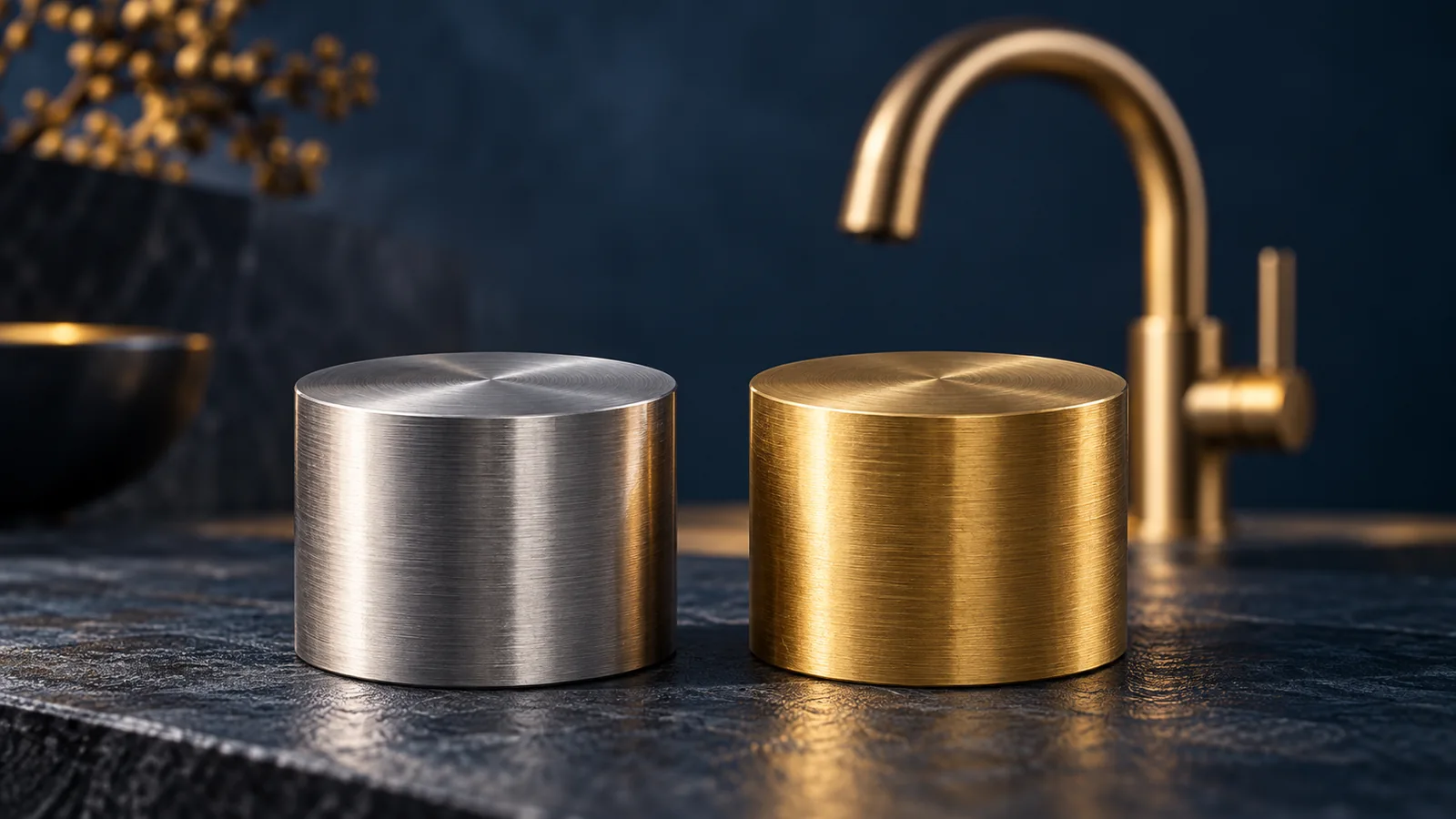
If you import kitchen faucets, wholesale them, or build a private-label brand, the body material is one of the first decisions you lock into a specification — and one of the hardest to change after tooling starts. Stainless steel and brass dominate the market, and both are legitimate engineering choices. The right answer depends on your target market's climate, your price positioning, and the lead regulations that apply where you sell.
This guide compares the two materials on the factors that actually matter to importers: corrosion behavior, cost structure, finishing, drinking-water compliance, and the verification steps that protect you from alloy substitution. It is written from the manufacturing side of the industry, not the showroom side.
The Short Answer
| Factor | Stainless Steel (SUS304) | Chrome-Plated Brass |
|---|---|---|
| Corrosion resistance in humid climates | Excellent — the alloy protects itself | Good — but depends entirely on plating quality |
| Lead in the body material | No added lead in the alloy | Depends on alloy; regulated markets need low-lead brass |
| Finish | Usually the material itself (brushed / polished) | Always a coating (chrome, PVD) over brass |
| Cost structure | Labor-intensive forming | Efficient forging; plating adds cost |
| Strongest fit | Humid markets, health-focused positioning | Chrome look, tight price points, complex shapes |
| Main sourcing risk | 201 alloy passed off as 304 | Plating failures; leaded brass in regulated markets |
Neither material is universally "better." Brass wins on tooling flexibility and entry price. Stainless wins on corrosion resistance and a simpler lead-compliance story. Your market decides which advantage is worth more.
What the Material Names Actually Mean
SUS304 stainless steel ("18/8")
The standard body material for quality stainless faucets. The nickname "18/8" refers to the alloy: roughly 18% chromium and 8% nickel. The chromium forms a thin, self-repairing oxide layer on the surface — that is what "stainless" actually means. The alloy contains no added lead.
SUS201 stainless steel
A lower-cost austenitic grade in which manganese replaces a large part of the nickel. It looks identical to 304 in a product photo. It is adequate for dry or lightly loaded components, but its corrosion resistance is noticeably lower in wet, humid or coastal environments — which is precisely where faucets live. The price gap between 201 and 304 is the single most common quality dispute in stainless faucet sourcing, so we cover verification in its own section below.
Brass: CW617N and HPb59-1
The workhorse faucet brasses. Both are copper-zinc alloys with a small lead addition that makes them free-cutting and suitable for hot forging. European-spec production typically uses CW617N; Chinese GB-spec production typically uses HPb59-1. Markets with strict lead rules require low-lead brass variants, which cost more to buy and to machine.
How each body is actually made
A brass faucet body starts as a hot-forged blank, is machined, and then goes through a plating line. A stainless faucet body starts as sheet or tube, is deep-drawn into shape, welded, and polished — the surface you touch is the alloy itself, not a coating. This manufacturing difference drives most of the practical differences below.
Cost Structure: Where the Money Goes
Three cost layers differ between the materials.
Raw material. Brass is priced off copper and zinc; 304 stainless carries about 8% nickel, so it is exposed to the nickel market. Both are commodity-linked and fluctuate — treat quotes more than a month old as indicative only.
Forming. Brass hot-forging is fast, highly automated, and tooling is mature. Stainless fabrication is labor-intensive: deep drawing, welding, and multiple polishing passes. This is why stainless faucets can cost more than brass even when the alloy itself is not more expensive per kilo.
Finishing. Brass requires a full plating line — pre-treatment, plating baths, and batch-level quality control. Stainless requires polishing and, optionally, PVD coating.
What this means at the negotiation table: when a "304 stainless" quote arrives as cheap as a comparable brass quote, the most likely explanations are alloy substitution (201 instead of 304), thinner walls, or plating shortcuts. Do not treat it as a win — treat it as a verification trigger.
Finish: Coating vs. the Material Itself
On a brass faucet, the finish is always a coating — chrome is the classic, PVD colors are the premium option. Durability depends on pre-treatment quality, bath chemistry and process control. When plating fails, it fails visibly: peeling, blistering, or pitting after humidity exposure. In coastal and tropical markets, plating quality is one of the main drivers of warranty claims.
On a stainless faucet, the finish — brushed or polished — is the material itself. A scratch does not expose a different layer underneath, because there is no underneath. PVD colors are also applied to stainless, and the substrate-coating combination is typically very durable.
This is why stainless has a strong story in humid markets. And it is why, if you buy brass, the plating specification deserves its own explicit line items in your purchase agreement.
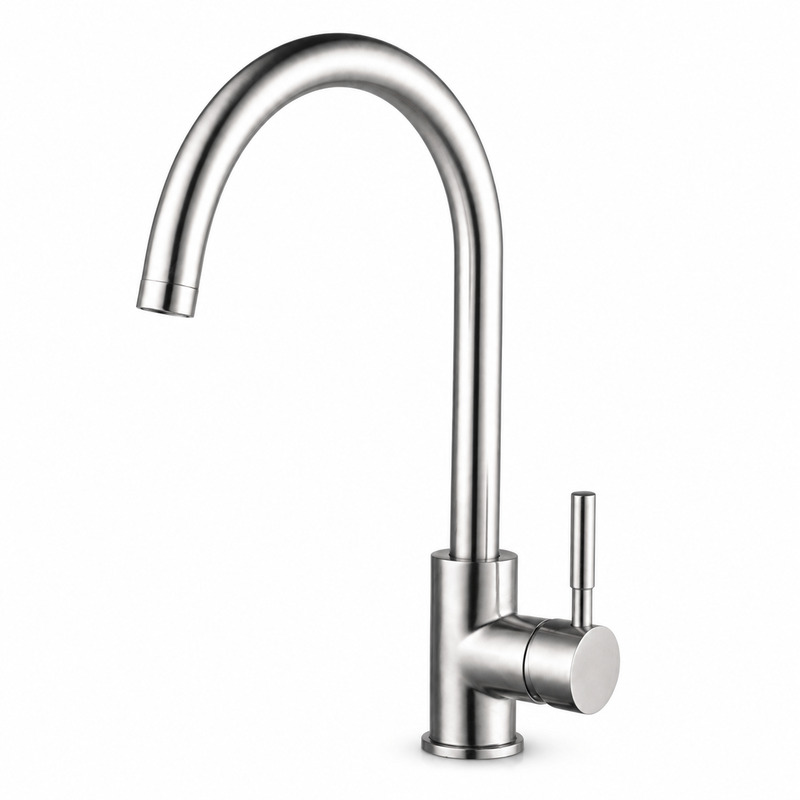
Lead and Drinking-Water Compliance
What the main standards actually cover:
- NSF/ANSI/CAN 372 defines "lead-free" for the US market as no more than 0.25% weighted average lead across wetted components. Many other markets reference or copy this threshold.
- NSF/ANSI/CAN 61 covers the health effects of materials in contact with drinking water.
- In Europe, EN 817 governs the mechanical performance of single-lever mixing valves — it applies to faucets of either body material. Drinking-water material approvals, however, run country by country: for example WRAS in the UK, KTW/DVGW in Germany, ACS in France.
There are two routes to low lead. The first is low-lead brass: well-proven, but the alloys cost more and machine harder. The second is stainless: the alloy contains no added lead in the first place, which simplifies the compliance conversation — but note that certification applies to the finished product, not the raw material, so a stainless faucet still needs its own testing.
One importer habit worth building, whatever material you choose: ask factories for certificates that match the exact model and the exact standard version you need — and check the validity dates. Certificates for "similar" models, or expired certificates, are common in this industry and mean very little.
How to Verify You Are Getting 304, Not 201
If you specify 304, here is what actually protects you:
- Mill test certificate (MTC), mapped to your order. Ask the factory to map heat numbers to production batches. An MTC that cannot be tied to your material lot is a piece of paper, not evidence.
- PMI spectrometry at inspection. A handheld spectrometer reads the alloy chemistry in seconds on finished parts. Build it into your pre-shipment inspection.
- Salt spray testing (e.g., ISO 9227 neutral salt spray) as a batch-level QC comparison — remembering that it is a controlled comparison test, not a real-life simulation.
- Put it in the purchase order. Alloy grade, verification method, and remedy terms. What is not in the contract is a wish.
And one myth to retire: the magnet test. Both 304 and 201 are austenitic stainless steels and both are only weakly magnetic in the annealed state; cold working can make either slightly magnetic. A magnet cannot tell you the nickel and manganese content — chemistry can. If a supplier assures you that a magnet is sufficient verification, that tells you something about the supplier.
When Brass Is the Better Choice
A balanced view, because serious importers ask:
- Complex geometry. Forging and casting give brass more freedom for one-piece bodies, internal waterways and unusual silhouettes.
- The chrome look. In many retail markets chrome remains the volume mainstream, and plated brass delivers it at the best price.
- Entry economics. At tight price points, brass tooling and unit costs are hard to beat.
- Proven supply. Decades of mature tooling, spare parts and technician knowledge.
If your market does not regulate lead strictly — or accepts low-lead brass — brass is often the rational, profitable choice. Material selection is market selection.
A Quick Decision Framework
- Humid, tropical or coastal market → stainless, or premium-plated brass with strict plating specifications
- Lead-regulated market (US-style rules) → stainless simplifies the story; low-lead brass is the alternative at a cost
- Price-first segment → brass
- Health / eco positioning → stainless
- Balanced portfolio → many importers carry both lines and let each SKU fight in the market where it fits
About MAXTEN
MAXTEN is the export brand of a sanitary-ware manufacturer with a faucet production base in Jiangmen, Guangdong, and a manufacturing history that dates back to 2002. We produce stainless steel kitchen faucets and basin mixers for importers, wholesalers and private-label brands, with OEM and ODM programs. Our production lines are currently being expanded to serve growing orders.
For samples, MOQ and lead times for your market, contact us at maxten_mr.lin@maxten.cn.
Frequently Asked Questions
Are stainless steel faucets lead-free?
The SUS304 alloy contains no added lead. However, "lead-free" in the regulatory sense (NSF/ANSI/CAN 372, max 0.25% weighted average lead) is a claim about the finished product — including small brass or polymer wetted components — and must be tested per product, not inferred from the body material.
Why do stainless steel faucets sometimes cost more than brass ones?
Not the alloy — the labor. Stainless bodies are deep-drawn, welded and polished in multiple passes, while brass bodies are hot-forged in highly automated processes. The cost difference is mostly manufacturing process, not raw material.
Can I check whether a faucet is really 304 stainless steel with a magnet?
No. Both 304 and 201 are austenitic and only weakly magnetic; cold working can make either slightly magnetic. Verify with a mill test certificate mapped to your order, or with spectrometry at inspection.
Which material is better for tropical or coastal markets?
Stainless steel has the inherent corrosion advantage — its protection is the alloy's own oxide layer, not a coating. If you buy brass for these markets, make plating quality an explicit, verified specification.
Next guide: SUS304 vs SUS201 faucets: how importers verify the grade.
YOUR NEXT SOURCING DECISION
Discuss the right faucet for your market.
Share your product specification, finish and target market with the MAXTEN team.